

ARTIFICIAL INTELLIGENCE : IT’S IN THE AIR
We recently saw the largest sell-off of commercial real estate stocks since the 2008 financial crisis, with tens of billions in market value lost over a couple of days. Given the strong fundamentals of the companies involved, i.e. CBRE and other large firms, the sell-off is mostly viewed as sentiment-driven or an irrational panic.
But what sparked this change in sentiment? Investors seem to have gone from viewing AI as the tide that will lift all boats to scrambling to try and gauge which firms and industries will survive the existential threat posed by AI. Although commercial real estate stocks have mostly rebounded for now, tech-software, financial services, and professional services sectors remain especially volatile. Given the unprecedented nature of this rapidly evolving technology, the road ahead looks rocky. The disruption is upon us—what form will it take, how quickly will it happen, and who will be the most affected?
As with social media and every new technological advancement before, we are told adopt or die. By and large, we have adopted with new technological advances historically creating more jobs as society adjusts and adapts to changes. Is this time really that different?
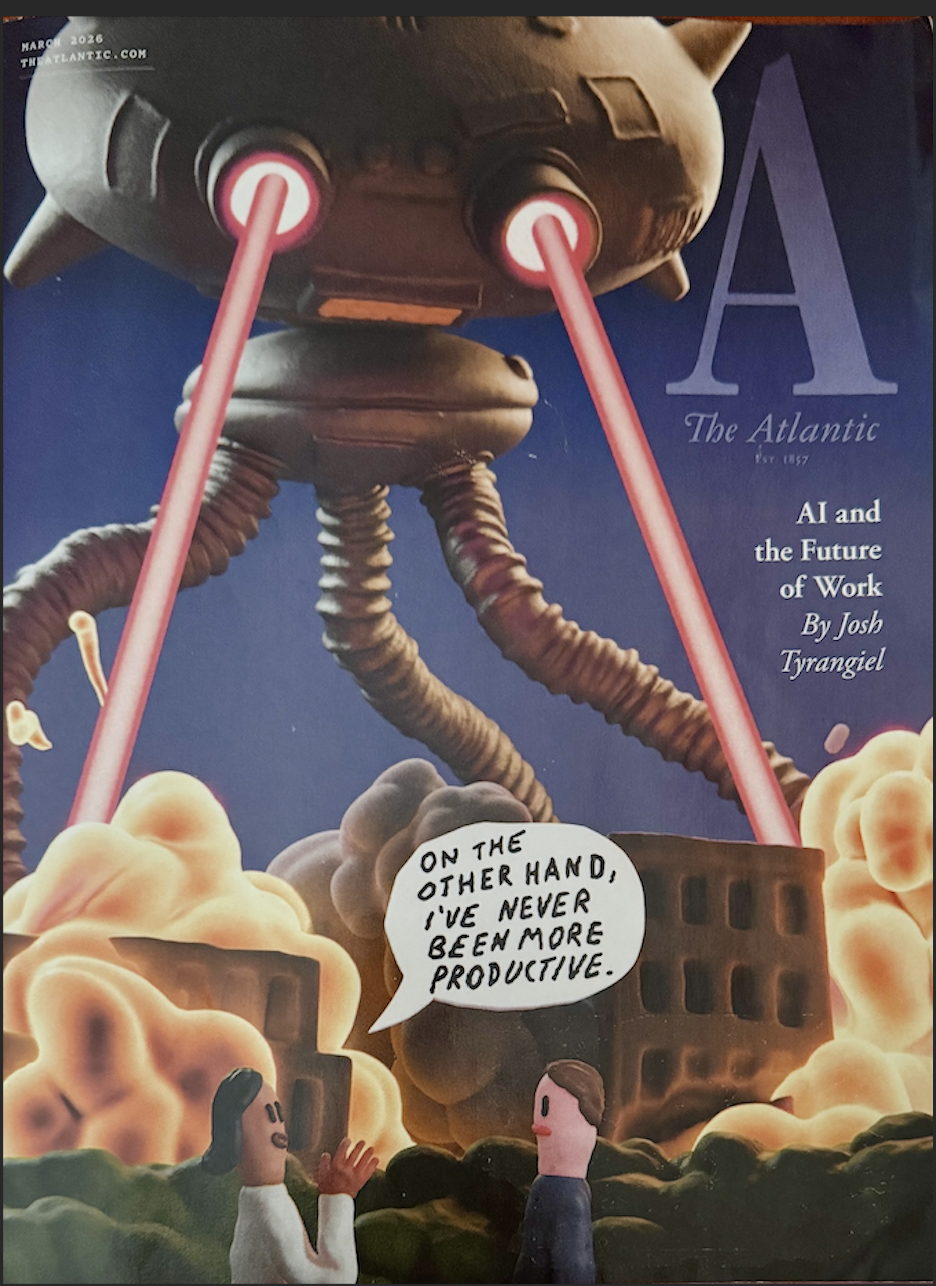
Stephan Dybus brilliantly illustrates our simultaneous anxiety and excitement regarding AI in the image below (The Atlantic, March 2026). The machines are burning it all to the ground AND I am doing the work of three people in half the time!
Beyond the questions of broader societal impact and regulatory challenges, the implications of AI for commercial real estate are not wholly known. As work begins to shift, the buildings and communities in which people work will also shift. Retail follows rooftops may not be a model of economic development that holds moving forward. Will the future white-collar work landscape require any traditional office assets outside of just the best-located, best-amenitized buildings? Are we destined for a world covered in warehouses and data centers?
Data centers are the single largest driver of new commercial real estate construction. The need for energy intensive AI computing power is creating major investment demand. Most US data centers are clustered around large cities to ensure access to populations using AI, as well as access to infrastructure (fiber optic networks, electricity, water). You can see on the map (from www.datacentermap.com/usa/) that Northern Virginia, Dallas-Fort Worth, and Silicon Valley currently have the highest concentration of data centers. In Georgia, most data centers are located around Atlanta, though a significant number are in Augusta to support the US Army Cyber Command and associated “Cyber District.”
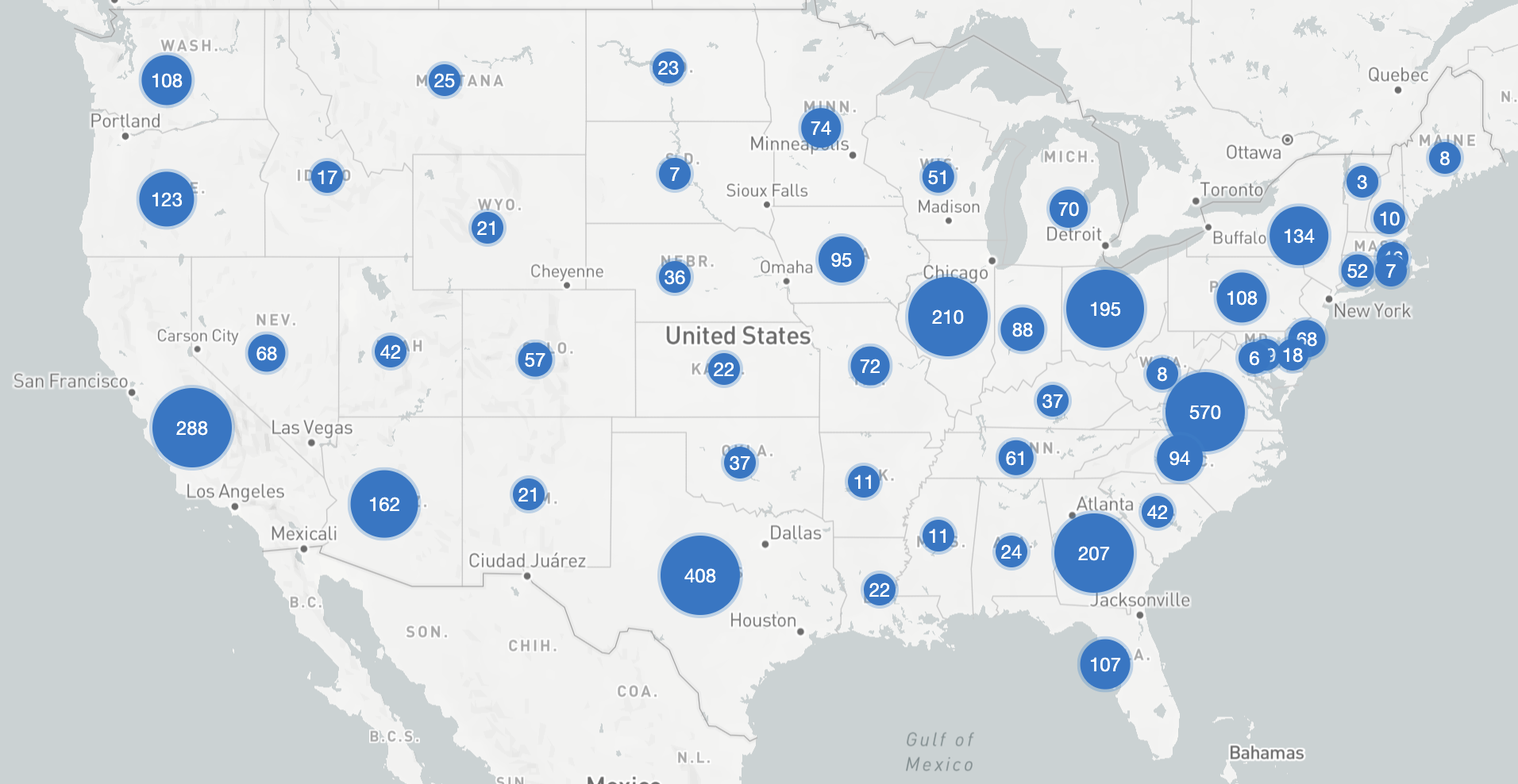
As of early 2026, the US has nearly 700 data center projects in the planning and construction phases with nearly every state vying for the big dollars associated with data center development. However, new projects around the country are also facing more political scrutiny and community resistance as people are seeing energy prices rise, property values fall, negative environmental impacts, and little if any direct benefits for the communities where data centers are located.
We do not have a major, private, multi-tenant data center in the Savannah MSA yet. At the end of 2025, the City of Port Wentworth passed a zoning amendment to allow data centers, with companies like Google, Meta, and Amazon reportedly looking at the region for new facilities. We’ll be keeping an eye out and will report back here.
As always, we would love to hear your thoughts.