

The local advantage: tybee island
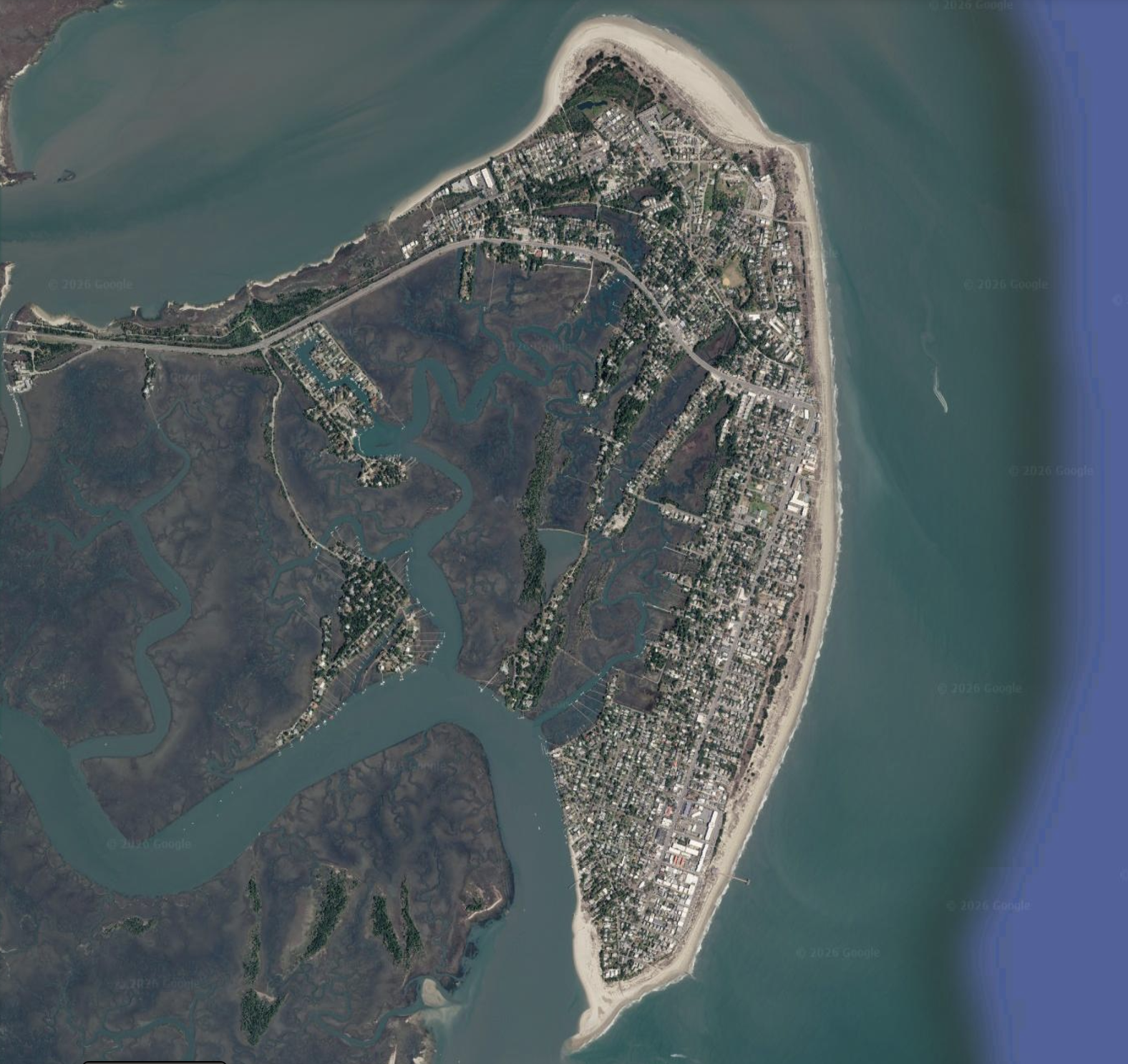
Introducing The Local Advantage, a new series that examines the distinctive neighborhoods and markets of Coastal Georgia. It’s summer, so we are going to start with Tybee Island.
One of 14 major barrier islands that flank the Georgia coast, Tybee has been woven into the region’s fabric for more than 400 years—having long served as the maritime entry point to the Port of Savannah.
Centuries before it became a premier coastal leisure market, this five-mile island, situated just 18 miles east of downtown Savannah, acted as a vital economic and military shield for the mainland. The introduction of the Central Georgia Railway in 1887 and completion of U.S. Route 80 in 1923 transformed the island from an isolated landmass into an accessible, land-constrained commercial ecosystem. Today, Tybee represents a high-barrier-to-entry market characterized by finite acreage, robust regulatory frameworks, and strong interest across multiple property types. This unique confluence of asset scarcity and modern demand is sustained by three primary economic drivers:
Tourism: Nearly two million visitors travel to the island annually, accounting for a daily population surge of up to 40,000 during peak seasons and generating an estimated $180 to $190 million in overall economic impact each year
Bars, Restaurants, and Hospitality: Tybee has over 140 brick-and-mortar commercial businesses, more than 40 restaurants, and an array of 500+ hotel and motel rooms that drive local spending and provide hundreds of local jobs
Short-Term Vacation Rentals (STVRs): Tybee maintains an active inventory of approximately 2,000 short-term rental listings, capturing an average daily rate (ADR) of roughly $425 to $445 and contributing significant lodging tax revenue to municipal infrastructure
As of Q3 2026, the retail vacancy rate for the Outer Islands submarket, which includes Tybee, sits at less than 1%. Commercial inventory is similarly limited, with only nine active properties currently listed for sale, including a restaurant property, a boutique hotel property, and a Highway 80 mixed-use property.
Beyond the market’s exceptionally tight commercial inventory, several recent developments underscore the unique dynamics driving Tybee’s commercial real estate market, from questions around STVRs to investments in community infrastructure and ongoing efforts to address the island’s coastal resiliency.
The City of Tybee Island is currently considering revisions to its STVR ordinance that would loosen restrictions adopted in 2024 while introducing new geographic limits. The proposed changes would establish four sectors with caps on STVR certificates, create waiting lists once those caps are reached, exempt owner-occupied properties from the caps, and allow certificates to transfer to immediate family members under certain circumstances. A public hearing is scheduled for August 13, 2026. These zoning changes are being considered against the backdrop of a recently dismissed lawsuit against the City, brought by a pro-STVR coalition, which argued that STVRs should be protected from regulation as residential housing. In dismissing the case, the judge is allowing the City to enforce stricter regulations, more in line with commercial standards.
In 2025, the City commissioned a Technical Assistance Panel (TAP) through the Urban Land Institute (ULI) to evaluate Memorial Park and the surrounding community facilities. The Panel explored how the roughly nine-acre park could be used more effectively while balancing preservation, recreation, stormwater management, and the community’s long-term facility needs. Its findings provide a framework for future investment in one of the island’s most significant community assets.
Nearby on Lovell Avenue, Tybee Island Maritime Academy (TIMA), the island’s only school and state’s only maritime-focused educational program, continues to consider solutions for its upcoming lease expiration in 2028. TIMA has discussed the possibility of joining the Memorial Park redevelopment, but also recently purchased the old Thunderbolt Elementary School building. It’s unclear when and where TIMA will move, but its eventual relocation will unlock a generational development opportunity along Butler Avenue.
City officials are continuing efforts to secure federal funding for the island’s next beach renourishment project, which is scheduled to begin in December. The City is seeking $12 million in federal funding for the project, and the American Coastal Coalition recently launched its #YEStoBeaches petition as part of a broader advocacy campaign supporting Tybee’s beach renourishment as well as other coastal restoration projects. In addition to protecting the island’s shoreline, continued beach maintenance is critical to Tybee’s tourism economy and, by extension, the value of the hospitality, retail, and residential assets that depend on it.
As Tybee Island continues to evolve, its next chapter will be defined not by how much it can develop, but by how strategically it uses its limited space. For investors, owners, developers, and tenants, it’s somewhere worth watching.
Over the coming months, we’ll continue exploring the distinctive neighborhoods and markets of Coastal Georgia through The Local Advantage, offering the local insight you need to navigate them with confidence. Follow along.