

LEGISLATIVE APPROACHES TO AFFORDABLE HOUSING
In a city that was once thought to be affordable compared to its counterparts of Atlanta or Charleston, Savannah’s housing prices have spiked in recent years. The price increases are a symptom of a tight housing market, caused by a pandemic-driven surge in population and relative stagnation of housing stock. Average rents in Chatham County increased nearly 50% between 2019 and 2024. While price growth is evening out, a recent Georgia Tech study suggests adding 3,700 new housing units in the metro area by 2033 to meet future population growth.
Last month, we briefly covered how the private sector is reacting, pulling almost 250% more housing permits in 2025 than in 2024. This month, we’ll take a look at legislative measures across national, state, and local levels to address housing unit construction and affordability.
At the Federal level, the Senate passed the 21st Century ROAD to Housing Act in March, which aimed to increase housing supply by reducing regulations, encouraging local zoning reform, and restricting large institutional investors from buying single-family homes. Though the House passed its own version of the bill in February, the current version of the bill is still in the reconciliation process as of mid-April.
The latest Georgia legislative session, which ended April 2, 2026, saw discussion on issues from property taxes to ADU (accessory dwelling unit) construction. Senate Bill 33, which contained limited restrictions on local property taxes, passed in the final hours of the session. House Bill 1166, which would override local zoning restrictions to allow the construction of accessory dwelling units, failed to pass the Senate.
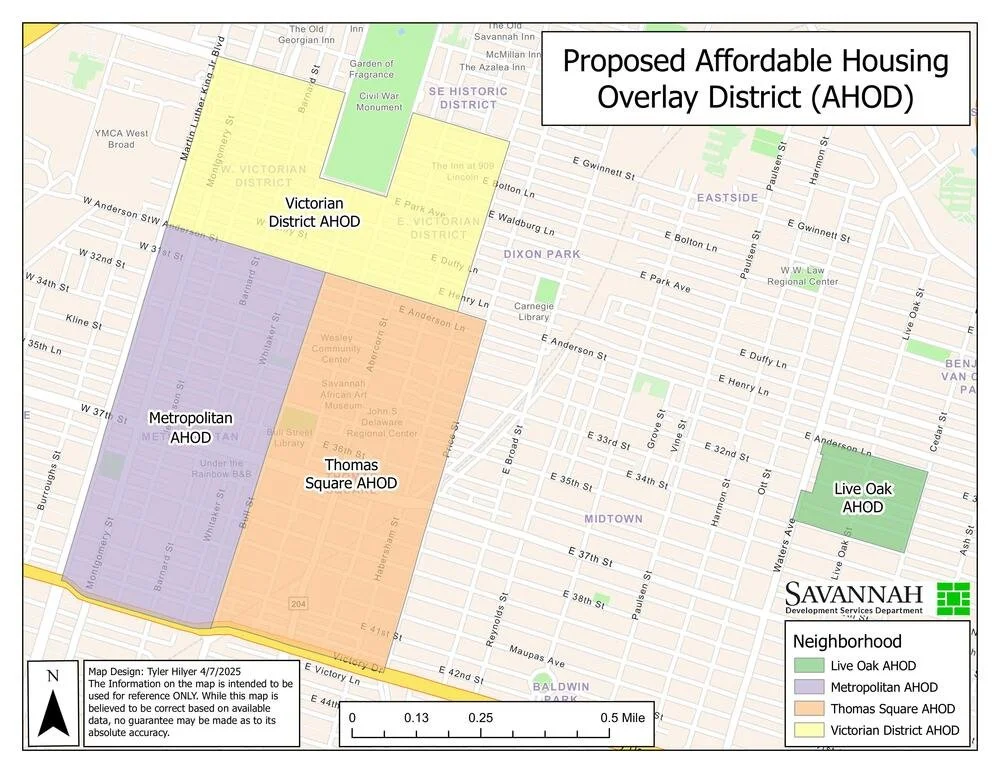
While State and Federal efforts help guide talking points and direct funding mechanisms, the most impactful work on affordable housing is at the local level. Earlier this month, the Savannah City Council participated in a three-hour, 12-stop bus tour of Savannah’s housing landscape. The tour highlighted types of development that policy tools could encourage. The Council recently approved measures to make ADUs easier to build. Last year, they established affordable housing overlay districts to allow higher density building. Other policies under consideration include an expansion of affordable housing density bonuses, allowing multifamily housing in business districts, and streamlining permit processes.
The goal of all of these bills is to incentivize the construction of more housing units. They also represent a real opportunity for small-scale and infill developers in the Savannah area market. An emphasis on “missing middle” units, through the construction of duplexes, quadplexes, cottage courts, and ADUs, creates a relatively low-risk entry point. Looking for your next housing project in Savannah? Let Level help you find the perfect site.